Is Masculinity in Crisis?
My name is Thomas Just, and I am just asking questions.
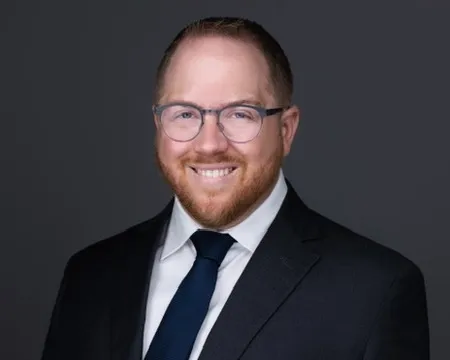
My name is Thomas Just, and I am just asking questions.
Is masculinity in crisis? How is it the case that masculinity and toxic have seemingly become synonymous? When did you last hear someone morally upstanding speak positively about masculinity? How is it that millions of young men have come to venerate people like Andrew Tate as an archetype of masculinity? Where are the men who believe in the worth of all women, fight for gender equality under the law, and celebrate women’s progress – and, in doing so, highlight themselves as masculine role models? How has our shift towards an information-based economy displaced historical support for masculine pillars? What is healthy masculinity? Or is this one of those things where a definition is elusive, but you know it when you see it, like Justice Potter and pornography?
As you can see, I have many questions, and I think we have a problem. When the government passed Title IX in 1972, Congress designed it to protect people from gender discrimination in academic settings. At its inception, men were 13 percent more likely to achieve a four-year college degree, but in the years since the asymmetry has reversed, women outpace men by 15 percentage points instead. Men are also ground zero for the loneliness epidemic. Research from 2021 found that 15% of men stated they have no close friends, up from a rate of only 3% in 1990. Loneliness is closely correlated with higher risks of anxiety, depression, cardiovascular illness, dementia, stroke, and premature death. American men are now nearly four times more likely than women to commit suicide; only half the population accounts for almost 80% of all suicides. Only two in five young adults are both weight-eligible and adequately active to serve in the U.S. military – think about the physical and mental ramifications. Simply stated, the boys and men are not okay.
To be clear, this is not the fault of improved gender equality, nor does it mean that reverting to prior gender inequities would lead to gains for another. We should celebrate the progress that women have made yet remember that women continue to struggle against a glass ceiling – and at the same time, ensure we do not continue to neglect how their male counterparts at the lower level of the socio-economic ladder are increasingly struggling. Given the centuries of misogyny, any review of difficulties faced by men commonly leads to the expectation that the blame will be hoisted onto women’s shoulders. Despite the problematic fact that many of us have been conditioned to expect any review of concerns facing one gender to be oppositionally related to the other primary gender, the reality is that progress for women does not mean that there is less for men.
And while I know you’re not supposed to break the fourth wall, I want to level with you here and just admit how difficult some of this has been to write and not come across as some crazy men’s rights activist. The second you start talking about how poorly boys and men are doing in this country, you are liable to sound like a crazy person. But I think that is precisely why I should venture into these troubled waters. We’ve been ignoring the problem through unintentional neglect and have essentially ceded the field to crackpots and charlatans with disastrous consequences.
But before I go any further, allow me to introduce myself. My interests and biography meet many traditional masculine stereotypes: nationally ranked high school athlete, college football fan (Hook’em), hunter, golfer, woodworker, and whiskey connoisseur.
I met my wife Beth over 10 years ago during my law school years and when she was in her medical residency training. Working as an attorney means that I make pretty good money, but as a physician, my wife has always been able to make more money than me. I love my wife, and having more money in our bank account does not threaten my masculinity. The gender roles growing up in Indiana were a stark contrast to my current home: my mother raised me as a far-right-wing evangelical poster child with minimal input from my largely absent (and eventually excommunicated) father. My childhood brainwashing included rigid definitions and brittle boundaries of manhood; these ideas were not only suffocating but also profoundly damaging and have taken decades of work to unlearn.
To escape, I enlisted in the US Air Force immediately after high school in the immediate aftermath of 9/11. The experience of feeling part of something bigger than myself, a cause worthy of devoting my life to, was remarkable. Ever since, I have keenly felt an itch to serve my community and country. Working for Democrat Congressman Lloyd Doggett during my undergraduate years afforded me my first foray into politics, and ever since, I have been involved in various kinds of political advocacy.
After graduating from law school, the Air Force (or, more specifically, DFAS) lost all the receipts to my last deployment, approximately seven years prior. It took a little over two years to get sorted. If you want to read the full story, follow this link: https://iava.org/media/read-thank-you-for-your-service-now-pay-up . But one of the things that came out of that experience was that I now know what it’s like to feel stuck and that no matter how hard you work, you somehow can’t get ahead. Ultimately, it worked out for me, but I’d be lying if I told you I knew it would all along. One of the things I hear from young men is this sentiment of feeling stuck and hopeless, which seems prevalent. Second, this experience gave me the unique opportunity to get involved with veteran advocacy initially through Iraq and Afghanistan Veterans of America (IAVA), leading to other opportunities with other organizations, which has been incredibly meaningful and fulfilling.
One of the most brilliant things I ever did was immediately start seeing a therapist after I got out of the Air Force, and I’ve been in therapy, for the most part, ever since. I waited until I got out because my commanding officer told me I would lose my security clearance if I saw one while working in intelligence. I live with anxiety, depression, and PTSD, and I can honestly tell you that I probably wouldn’t be here today if I hadn’t gone to therapy. Everyone should see a therapist – we all have our shit to work through. Alright, enough about me. But I hope that with that introduction, you can understand where I am coming from and what I bring to this discussion.
So, where am I going with all this? I want to ask questions that fall into two categories—first, the personal, and second, the structural. Personal issues (such as responsibility, psychology, and spirituality) are things that an individual can control or at least influence that will affect their life outcomes. Conversely, structural issues result from policy choices we’ve made at some level as a society – i.e., sociology, macroeconomics, law, etc. Also, occasionally, I’d like to explore and create content about some of my hobbies and interests that men will find interesting.
I want to explore what it means and what it looks like to show up in today’s world as masculine. I also want to acknowledge and interrogate the more extensive policy choices or neglect that are causing these gender disparities and preventing boys and men from doing well. I have assigned myself a stack of books and a list of podcasts, but I am always open to recommendations. I plan to continue to write here and do some interviews in the form of podcasts exploring some of these themes. At least initially, I want to interview men who have dedicated their lives to public service and explore how their masculinity manifests. I do family and criminal law and would love to explain and explore how men are treated within these arenas. I plan on getting the authors of some of the books I’m reading on the podcast to help further explore these themes. Sometimes, things might get a little heavy, and I hope we can have a little fun and levity with others. Together, we can learn how to ask better questions, and if we get lucky, we can find some answers. I hope you’ll join me.